Enter your text here...
Guest Post by Tisha Richmond
In Career & Technical Education, vocabulary isn’t just a set of words, it’s the secret language of industry. The right words help them think, work, and sound like professionals in the trade. And, when we are teaching words, we’re helping our students build confidence and a classroom community that comes alive with curiosity.
But let’s be real…vocabulary worksheets rarely spark joy. I have never heard a student say, “I can’t WAIT to write down the definitions for these unit terms!” Instead of the dreaded worksheet, I love to turn vocabulary into a game. Games may be seen as ‘extra’ or non-essential, but they’re actually serious learning in disguise. Designed with purpose, they can be one of the most effective ways to spark engagement and deepen understanding.
Here’s Why:
- Joy is a brain booster! When students laugh and play, their brains light up with dopamine, boosting motivation, memory, and their attention.
- Play transforms memorizing into mastery. When students act, sculpt, or draw a word, they are internalizing and making connections that they wouldn’t otherwise make.
- Games build real-world skills. Collaboration, problem-solving, curiosity, communication, resilience, and creativity are skills the current and future workforce needs….and games build them naturally.
Want to hear the best part? All you need is a simple stack of vocabulary cards to open up a whole universe of playful learning possibilities! Create your vocabulary cards using index cards or blank laminated playing cards. Shuffle the deck, and you’re ready to play!
Let’s explore a few of my favorites that you can bring into CTE or any other content area with ease!
Time’s Ticking (Inspired by Time’s Up)
Work as a team to guess as many vocabulary words as possible across three rounds of increasing challenge (verbal clues, one-word clues, and charades).
Time
Approximately thirty minutes. The teacher determines whether the game ends based on time or points.
Materials
- Twenty to forty vocabulary cards (can be created by the teacher or students)
- Container or bag to hold cards
- Timer
How to Play
- Divide students into teams (three to five players per team works best).
- Shuffle vocabulary cards and place them in a container.
- Review basic rules and rounds with students before starting.
Round One: Verbal clues
- A player draws a card and describes the vocabulary word using any words except the word itself or its derivatives.
- Teammates guess as many words as possible within sixty seconds.
- When time is up, pass the container to the next team. Continue until all cards have been guessed.
Round Two: One-word clues
- Using the same set of cards, players can only say one word to hint at the vocabulary word. No gestures, no sounds. Just one word.
- Teams guess as many words as they can in sixty seconds.
Round Three: Charades
- Again, using the same set of cards, players can only act out the word. No speaking or sounds allowed.
- Teams guess as many words as they can in sixty seconds.
Variations
- Allow teams to “pass” on one word per round.
- Use pictures instead of words for emerging readers.
- Play in smaller groups for a station rotation.
Top of Mind (Inspired by Hedbanz)
Ask yes/no questions to correctly guess the vocabulary word on your forehead within the time limit, earning points for your team.
Time
Ten to twenty minutes. The teacher determines whether the game ends based on time or points.
Materials
- Set of twenty to forty vocabulary word cards
- Timer
How to Play
- Each player draws a vocabulary card without looking and places it on their forehead. Everyone can see each player’s card except their own.
- In each turn, a player asks their team yes/no questions to try to figure out their vocabulary word. Example questions could include: “Am I a kitchen utensil?” “Am I something you eat?” “Would I hold it?”
- Players have one minute to guess their word.
- If they guess it, they score a point and draw a new card for another round.
- Play continues until all cards have been guessed or until a time limit is reached.
Variations
- Allow teams to “pass” on one word per round.
- Use pictures instead of words for emerging readers.
- Play in smaller groups for a station rotation.
- Allow teammates to give a one-word clue after thirty seconds if the player is stuck.
- Class challenge: How many vocabulary words can the whole class guess in ten minutes?
Wild Unicorn (Inspired by Cranium)
Teams work together to guess words correctly through sculpting, drawing, or charades. The team with the most points before time runs out wins the game.
Time
Twenty to thirty minutes. The teacher determines whether the game ends based on time or points.
Materials
- Set of twenty to forty vocabulary word cards
- A deck of playing cards
- Timer
- A handheld dry-erase whiteboard
- Play-Doh
- Creativity Card Key
How to Play
- Set up a document camera that students can sculpt Play-Doh under so it will project on screen.
- Have a cleared whiteboard ready for drawing.
- Pass out Creativity Card Keys to tables for easy reference.
- Divide the class into two teams.
- Decide who goes first by rolling dice or with a quick round of rock-paper-scissors.
- One player from the first team comes to the front and draws a playing card and a word card.
- The playing card’s suit determines the action (as shown below) and the number on the card determines how many points can be earned if the word is guessed correctly.
- Cards numbered 2–10 are worth their face value.
- Jacks, queens, and kings are worth ten.
- Aces are worth eleven.
- Jokers are worth twenty.
- Diamonds: Draw the word on the whiteboard.
- Spades: Sculpt the word with Play-Doh.
- Clubs: Act out the word using charades.
- Hearts: “Wild Unicorn” allows players to choose any action (draw, sculpt, or act).
- Players have one minute to get their team to guess the word on the card drawn. If their team doesn’t guess, the opposing team gets a chance to steal the points.
- The team with the highest score wins the game.
- You can play until a set time or until one team reaches a predetermined score.
Variations
- You can play as a whole class or in smaller groups.
- You can make challenging words worth double points to add excitement.
When Joy and Learning Collide, Magic Happens.
A single set of vocabulary cards can spark collaboration, confidence, creativity, and courage. When students are willing to take risks, laugh a little, and try something new, they don’t just learn the words. They own them. In CTE classrooms, that matters. In every classroom, that matters. Let’s make vocabulary playful, memorable, and of course….MAGICAL!
Looking for more gamified strategies? I’ve got you!!
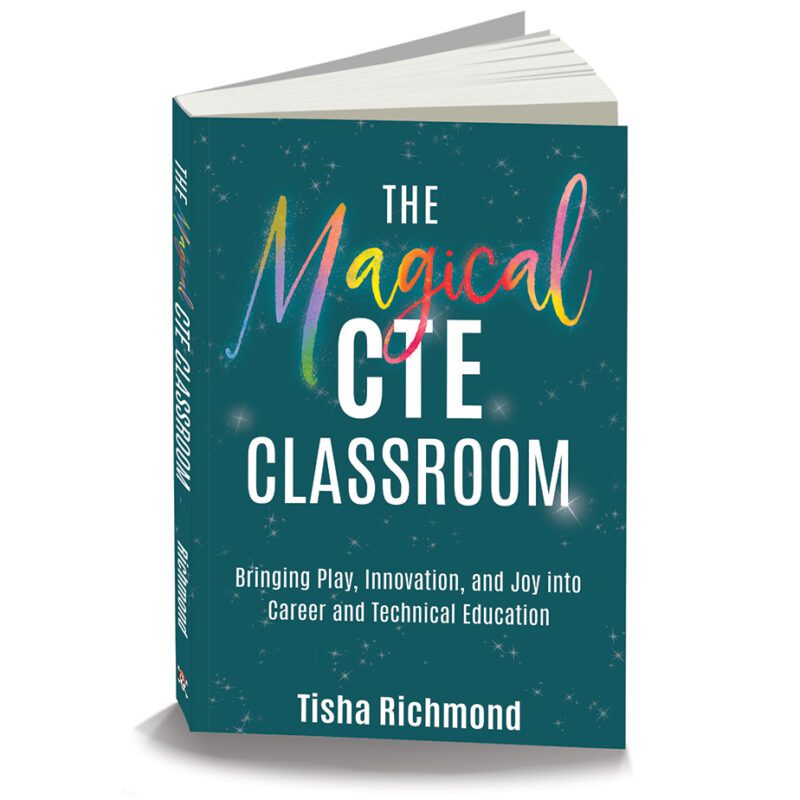
Find MANY more game-based strategies for vocabulary acquisition, reflection, creativity, and so much more in my new book The Magical CTE Classroom: Bringing Play, Innovation, and Joy into Career & Technical Education! Find it on Barnes & Noble or Amazon!